 Cooking
Ingredients
- 500 g bread flour (approximately 4 cups)
- 350 ml lukewarm water
- 7 g instant yeast (2¼ teaspoons)
- 10 g salt (about 1¾ teaspoons)
- Extra flour for dusting
- 1 cup hot water for creating steam in the oven, if using a suitable oven-safe pan
Instructions
Step 1: Prepare the Dough
In a large mixing bowl, combine the bread flour and instant yeast. Add the lukewarm water gradually, mixing with a wooden spoon until a rough, sticky dough forms.
Let the mixture rest for 15–20 minutes. This resting period allows the flour to absorb the water and makes the dough easier to work with.
Add the salt and mix thoroughly until it is evenly distributed throughout the dough. The dough should feel soft and slightly sticky. Avoid adding too much extra flour, as this can make the finished baguettes dense and dry.
Step 2: Knead the Dough
Transfer the dough to a lightly floured work surface. Knead for approximately 8–10 minutes, stretching and folding the dough until it becomes smoother and more elastic.
If the dough sticks to your hands, lightly dampen your hands instead of adding large amounts of flour. As you knead, the gluten develops, helping the baguettes hold their shape and produce a chewy texture.
You can also knead the dough in a stand mixer fitted with a dough hook on low to medium speed until it becomes elastic.
Step 3: First Rise
Place the dough in a lightly greased bowl and cover it with plastic wrap or a clean kitchen towel.
Leave it in a warm, draft-free place for approximately 1–1½ hours, or until it has noticeably increased in volume.
For a better structure, gently stretch and fold the dough over itself once or twice during the first hour. To do this, lift one side of the dough, stretch it upward without tearing it, and fold it toward the center. Repeat with the remaining sides.
Cover the dough again and allow it to continue rising.
Step 4: Divide the Dough
Once the dough has risen, transfer it carefully to a lightly floured surface.
Divide it into two equal portions using a dough scraper or sharp knife. Handle the dough gently to preserve the air bubbles formed during fermentation.
Shape each portion into a loose rectangle. Cover the pieces with a towel and let them rest for 10–15 minutes. This short rest relaxes the gluten and makes shaping easier.
Step 5: Shape the Baguettes
Take one piece of dough and gently flatten it into a rectangle.
Fold the top edge toward the center and press it down to seal. Fold the bottom edge toward the center and press again. Fold the dough lengthwise in half, then pinch the seam closed.
Place the dough seam-side down and roll it gently with your hands, moving from the center outward toward the ends. Continue until it forms a long, narrow loaf approximately 14–16 inches long.
Taper the ends slightly to create the classic baguette shape.
Repeat with the second piece of dough. Avoid pressing too hard, because excessive handling can remove the air needed for a light interior.
Step 6: Second Rise
Place the shaped baguettes seam-side down on a parchment-lined baking tray, leaving enough space between them.
If you have a baguette pan or a linen couche, use it to support the dough while it rises.
Cover the loaves loosely with a clean kitchen towel and let them proof for 30–45 minutes, or until they look slightly puffy.
Meanwhile, preheat the oven to 475°F (245°C). If you plan to create steam, place a sturdy, oven-safe metal pan on a lower rack while the oven heats.
Step 7: Score the Baguettes
Once the loaves have proofed, uncover them carefully.
Using a sharp bread lame or a very sharp knife, make 3–5 diagonal slashes along the top of each baguette. Each cut should be approximately ¼ inch deep and slightly overlap the previous cut.
Scoring allows the bread to expand in a controlled way during baking and gives baguettes their traditional appearance.
Make the cuts confidently and avoid pressing down on the dough, which could cause it to deflate.
Step 8: Bake with Steam
Place the baking tray in the preheated oven.
If your oven and metal pan are suitable for steam baking, carefully pour about 1 cup of hot water into the preheated pan. Stand back because the steam will rise rapidly, and close the oven door immediately.
Steam helps the surface of the dough remain flexible during the initial stage of baking, allowing the baguettes to expand before the crust hardens.
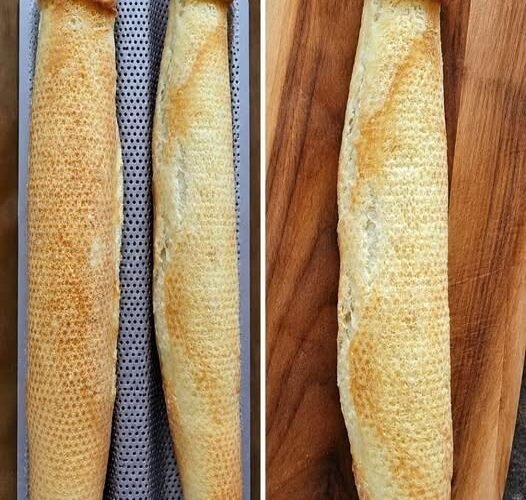
Bake for 20–25 minutes, until the baguettes develop a deep golden-brown crust. If the crust is still pale after 20 minutes, continue baking for a few more minutes.
Use oven mitts when handling hot equipment. Never pour water directly onto the oven floor or glass door, and do not use a pan that is not designed to withstand sudden temperature changes.
Step 9: Cool the Bread
Remove the baguettes from the oven and transfer them to a wire rack.
Let them cool for at least 20–30 minutes before slicing. During this time, the interior finishes setting, and excess moisture escapes from the crust.
Cutting the baguettes too soon can make the crumb gummy and cause the bread to lose its structure.
Once cooled, slice with a serrated bread knife and enjoy the crisp crust and soft, chewy center.
Tips for Perfect French Baguettes
- Measure ingredients carefully: A kitchen scale provides the most consistent results.
- Use bread flour: Its protein content helps develop a strong, chewy crumb.
- Allow enough rising time: The dough should become airy and noticeably larger before shaping and baking.
- Avoid excess flour: A slightly sticky dough helps produce a lighter interior.
- Create steam safely: Steam supports crust development and oven spring during the beginning of baking.
- Bake until golden: A deep golden crust provides a richer flavor and better crispness.
- Cool completely: This helps the crumb set and keeps the texture pleasant.
Storage Instructions
Store completely cooled baguettes in a paper bag or bread box at room temperature for up to 2 days. Avoid refrigerating them, as refrigeration can accelerate staling.
To refresh a baguette that has become soft, lightly sprinkle the crust with water and heat it in a 350°F (175°C) oven for 5–8 minutes. Allow it to cool briefly before serving.
For longer storage, wrap the cooled baguettes well and freeze them for up to 3 months. Thaw at room temperature and warm in the oven to help restore the crispy crust.
Serving Suggestions
Serve your homemade French baguettes with butter, olive oil, cheese, or your favorite soup. They are also excellent for sandwiches filled with roasted vegetables, chicken, tuna, or fresh salad.
For a simple breakfast, slice the bread and spread it with butter and jam. For a savory appetizer, toast slices and top them with garlic, tomatoes, and herbs.
Freshly baked French baguettes bring wonderful aroma and flavor to any meal. With patience, proper shaping, and a hot oven, you can create crusty, chewy bread at home using just flour, water, yeast, and salt.