 Cooking
Ingredients
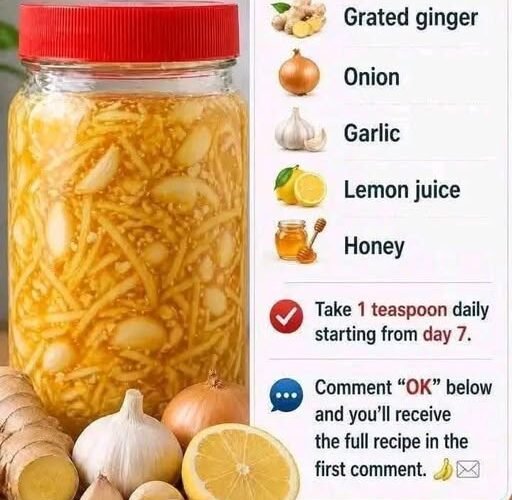
- 1 tablespoon freshly grated ginger
- 1 small onion, finely chopped or grated
- 2–3 fresh garlic cloves, crushed
- 2 tablespoons freshly squeezed lemon juice
- 3–4 tablespoons pure honey
- 2 tablespoons warm water (optional)
Preparation time: 10–15 minutes Resting time: 2–4 hours Difficulty: Easy
Instructions
Step 1: Prepare the ginger
Wash the ginger root thoroughly under running water. Peel it if desired, then grate it finely using a clean grater. Fresh ginger provides a warm, spicy flavor to the mixture.
Place the grated ginger in a clean glass bowl.
Step 2: Chop the onion
Peel one small onion and chop or grate it into small pieces. Smaller pieces release more juice and make it easier to combine the onion with the other ingredients.
Add the onion to the bowl with the ginger and mix gently.
Step 3: Crush the garlic
Peel two or three garlic cloves and crush them using the flat side of a knife or a garlic press.
Allow the crushed garlic to sit for about five minutes before adding it to the bowl. This helps develop some of the compounds responsible for garlic’s characteristic aroma.
Mix the garlic with the ginger and onion.
Step 4: Add fresh lemon juice
Cut a fresh lemon in half and squeeze out two tablespoons of juice. Remove any seeds.
Pour the lemon juice over the ginger, onion, and garlic mixture. Stir thoroughly so the ingredients are evenly combined.
Lemon adds a refreshing citrus flavor and contains vitamin C, although the amount in a serving depends on the quantity used.
Step 5: Add honey
Pour three to four tablespoons of honey into the bowl. Stir slowly until the honey coats the other ingredients.
Honey softens the sharp taste of the onion, garlic, and ginger, making the mixture easier to consume.
If the mixture seems too thick, add a small amount of warm—not boiling—water and stir again.
Important: Never give honey to children younger than 12 months because of the risk of infant botulism.
Step 6: Let the mixture rest
Transfer the mixture into a clean glass jar with a tight-fitting lid. Let it rest in the refrigerator for two to four hours so the flavors can blend.
Because this recipe contains fresh, cut ingredients and has not been tested for food preservation, refrigerate it promptly. Make small batches, use a clean spoon each time, and discard it if it develops an unusual smell, mold, or other signs of spoilage. Do not assume that honey or lemon juice makes the mixture shelf-stable.
How to Use This Homemade Mixture
Adults who enjoy this mixture can try a small amount, such as one teaspoon, to see how they tolerate its strong flavor.
- For throat comfort: A small spoonful of honey may help soothe a cough associated with a common cold.
- As a warm drink: Stir a small amount into a cup of warm water.
- With food: If the taste is too strong, use a little of the mixture as a flavoring in an appropriate savory dish.
There is no established medicinal dose for this particular combination. More is not necessarily better, and consuming large amounts may irritate the stomach.
Benefits of the Ingredients
1. Ginger
Ginger contains compounds called gingerols and has a long history of culinary and traditional medicinal use. It may help with certain types of nausea, but evidence that it treats ordinary colds or coughs is limited.
2. Onion
Onions contain flavonoids, including quercetin, and provide flavor and nutrients. Although onions are used in many traditional home remedies, there is insufficient clinical evidence that onion juice cures respiratory infections.
3. Garlic
Garlic contains sulfur-containing compounds, including allicin, which forms when garlic is crushed. Garlic is nutritious, but research does not establish that eating raw garlic treats or prevents a cold reliably.
4. Lemon Juice
Lemon juice adds citrus flavor and vitamin C. Vitamin C is important for normal immune function, but taking extra vitamin C after cold symptoms begin has not consistently been shown to shorten the illness.
5. Honey
Honey coats the throat and may provide temporary relief from coughing, particularly at night. Some evidence supports its use for cough relief in children older than one year, although it does not eliminate the underlying infection.
Important Precautions
Although the ingredients are common foods, this mixture may not be suitable for everyone.
- Stomach sensitivity: Raw garlic, onion, lemon juice, and ginger may cause heartburn, nausea, or digestive discomfort.
- Medication interactions: Concentrated or frequent garlic and ginger consumption may be a concern for people taking blood-thinning medicines. Ask a healthcare professional if you take regular medication.
- Diabetes: Honey contains sugar and can raise blood glucose levels. Include it in your overall carbohydrate intake.
- Allergies: Avoid any ingredient that causes an allergic reaction.
- Pregnancy and breastfeeding: Normal culinary amounts are generally different from concentrated medicinal use. Ask your healthcare professional before using large quantities as a remedy.
- Children: Never give honey to an infant under 12 months. For young children, seek age-appropriate advice before using homemade remedies.
Seek medical attention for difficulty breathing, chest pain, coughing up blood, dehydration, or severe or worsening symptoms. Consult a healthcare professional if a cough persists or you are concerned about your condition.
Storage Tips
- Store the mixture in a clean, tightly covered container in the refrigerator.
- Prepare small quantities rather than making a large batch.
- Use a clean, dry spoon every time you serve it.
- Because the mixture has no validated preservation method, use it promptly and discard leftovers if you are unsure of their safety.
- Never store the fresh mixture at room temperature for extended periods.
Final Thoughts
This ginger, onion, garlic, lemon juice, and honey mixture is a simple homemade recipe that combines familiar kitchen ingredients into a sweet, tangy, and spicy preparation. Honey may help soothe a cough, while the other ingredients add flavor and useful nutrients to your diet.
Enjoy it as a food-based comfort measure rather than a miracle cure. Rest, adequate fluids, appropriate symptom relief, and medical care when necessary remain important parts of looking after yourself when you are unwell.